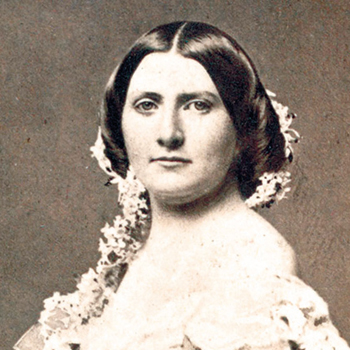
Harriet Lane
Just weeks into Harriet Lane's tenure as First Lady, the sudden death of her brother marked a period of mourning and thus halt to any formal entertaining in the White House.
With the start of the Administration's first full social season, from November of 1857 to April of 1858, Harriet Lane was charged by her uncle with the formal responsibilities of arranging all social events in the White House, as well as overseeing the interior refurnishing of state rooms.
While later romanticized as elegant events, there is an indication that the mechanics of planning White House entertaining were less Harriet Lane's strength than was the intellectual engagement she encouraged among guests, led by her own interests in their work. One regular guest, for example, noted a singular lack of floral ornamentation at her event, despite the new greenhouses which had been built on the west side of the residence. During one formal dinner when a cured salty ham had been soaked for too long and rendered it tasteless, the President complained to Harriet Lane in front of other guests, that the quality of food being served reflected her poor oversight of kitchen staff. He had also reprimanded her for failing to arrange for music during the Administration's first formal dinner and for canceling the order of wine he had placed for his guests that evening.
At least one frequent guest challenged a prevailing perception of Harriet Lane, claiming "it cannot be said" that she was "a popular woman." As Sarah Pryor recalled, Harriet Lane "followed a prescribed rule of manner from which she never deviated" and thus "lacked magnetism."Harriet Lane adhered strictly to the limitations which the President believed were appropriate for the family of a leader of a democracy, namely that she refuse all gifts offered to her. "Think of my feelings when the lovely lacquered boxes and tables from the Japanese Embassy brought me were turned form the door," she later recalled her frustration, "to say nothing of the music-boxes and these fascinating sewing-machines they had just invented."
Without concern for religious judgment she played card games for small stakes and indicated her view on temperance by drinking wine openly at formal White House dinners.
The one place in the White House Harriet Lane seemed to best relax without being observed was the greenhouse, which was attached to the west side of the residence in 1856. Here she often came with friends to walk and speak freely, as they looked over the flowers which bloomed all year.
Harriet Lane was the first woman presidential family member who was called "first lady in the land" in public print (anecdotal legend claims that President Zachary Taylor first applied this title to the late Dolley Madison at her July 1849 funeral).
Before the Buchanan Administration ended, seven southern states seceded from the United States. Harriet Lane is reputed to have acted as a personal emissary on behalf of her uncle, pleading with southern members of his Cabinet and other political allies to resist abandoning him and resigning their positions as acts of regional loyalty.