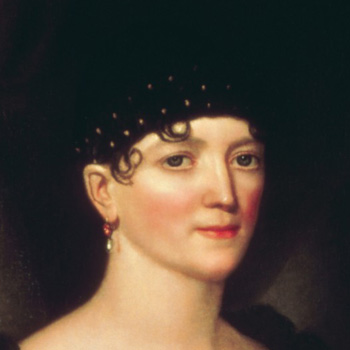
Elizabeth Monroe
Elizabeth Monroe provided an extreme contrast to her predecessor Dolley Madison, who had conceived of her role as partially a public one. As a consequence of both her fragile health and reserved social nature, as well as the prestige she hoped to convey by limiting the access of the President's wife to the spouses of other officials, Elizabeth Monroe established a European-style, less democratic protocol.
When Elizabeth Monroe did appear at receptions and other events in which the public would see her, she appeared youthful and capable; yet she was always accompanied and protected by a circle of her female relatives. The White House did not release any information on the details of Elizabeth Monroe's health condition; had it been known that she suffered from what was then called " the falling sickness, " of epilepsy there might have been understanding. Rudimentary ignorance regarding epilepsy at the time, however, led to widespread assumptions that it was a form of mental illness, making it even more unlikely that the Monroes would not have wished to disclose the details.
To what extent Elizabeth Monroe was politically influential or expressed an opinion on the events and decisions faced by her husband are not known; it was widely accepted that after her death, James Monroe burned all their correspondence. In remembering his wife, Monroe would later write obliquely that she had shared fully in all aspects of his public service career and was always motivated by the interests of the U.S. One letter, from her influential son-in-law George Hay, however, does suggest that she was sought for her political savvy in response to at least one difficult situation involving the controversial Virginia Congressman John Randolph. She also formed enough of a close relationship with Andrew Jackson, then the popular hero of the Battle of New Orleans, to always be mentioned in the president's letters to the general.
Due to the fragile condition of Elizabeth's health, many of the duties of official White House hostess were assumed by her eldest daughter, Eliza Monroe Hay.