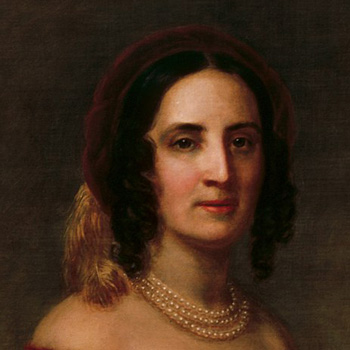
Sarah Polk
Known as a strict “Sabbatarian,” she refused to permit any business to be conducted on Sundays, famously once having the new Austrian Minister turned away when he came to present his credentials to the President. Although she continued her longstanding refusal to attend the racetrack where gambling took place and also barred dancing in the White House, she never delineated that either of these decisions were based on her religious views. Although music for dancing or other entertainment of invited guests was not provided at the White House, the Marine Band did introduce the appearance of the President by playing the martial air that came to be known as “Hail to the Chief,” said to be a continuance of a custom begun by her predecessor Julia Tyler. While there is no evidence that she specifically banned the public concerts held on the lawn for the general public, also begun in the Tyler Administration, there are also no firsthand accounts by those who may have attended them if, in fact, they were continued. Sarah Polk did refuse to continue serving whiskey, beer and other alcoholic beverages other than wine, which was only served to dinner guests. Neither Polk, however, indulged in the wine.
Since not all of the restrictions enacted during the Administration can be traced to Sarah Polk’s personal religious views, some may have been unfairly ascribed to her, as opposed to the President. While he was not as strictly religious as his wife, James Polk resented any intrusion into his work time, especially if it involved what he considered to be a frivolous distraction, a famous example being when a juggler was invited to perform for guests and he resented the time lost as he politely sat through the demonstration. Another factor which affected entertaining at the White House was the fact that Sarah Polk had no previous experience running a large household or entertaining on a large scale. The general public had the chance to meet her at one of her twice a week open-house receptions. In the White House, she left management of event to the household staff. On one occasion, as she sat down for a formal dinner, another guest had to point out the fact that there were no napkins at the table settings.
Sarah Polk’s political role continued to evolve in response to the needs of her husband. It was the First Lady, for example, not the President who often greeted members of Congress, enjoying in-depth discussions on legislation or other pending issues when they called for the President on Saturday afternoons (likely as a result of not being in working sessions that day). Since the Polks were so often together during their White House tenure, there were few letters between them from which can be derived definitive examples of her widely acknowledged political acumen. One source claims that she “read and passed judgment” on the President’s speeches, though there is no documented citation for this.
Mrs. Polk later expressed her belief that the acquisition of California and New Mexico, resulting from the war, were among the most important turning points in the nation’s history. To those who voiced opposition to the conflict, she simply replied that there was “always someone opposed to everything.” A more startling remark, recorded by a dinner guest seated beside the First Lady was her remark that “whatever sustained the honor and advanced the interests of the country, whether regarded as democratic or not, she admired and applauded.”
Although the Seneca Falls Convention for Women’s Rights was held in Seneca Fall, New York during Sarah Polk’s tenure as First Lady, the call made by the gathered women for the right to vote and to address other gender inequalities was considered radical by most citizens at the time. In one instance, following a working woman’s remarks that she was making her first visit to the White House, Sarah Polk observed to others that this was to be expected because the woman’s need for employment indicated that she was of a lower status than that of women like herself who were married to successful men.